

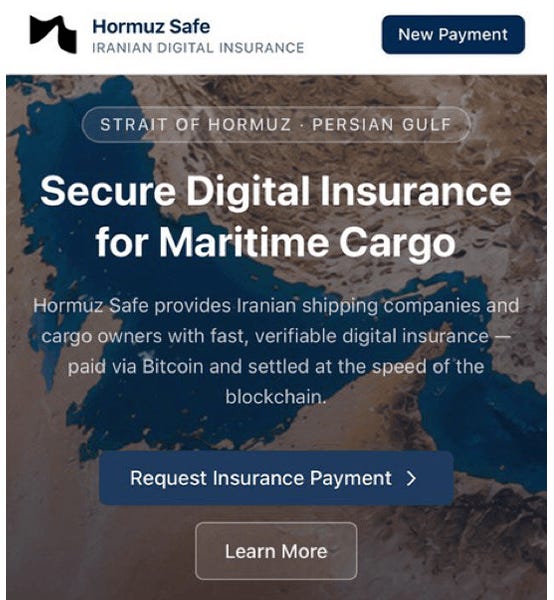
It was another week of whipsawing bond yields, blowout AI results, and the longest “final stage” discussions of any Artful Deal in recent memory, but to our eyes, the most noteworthy takeaway from the week was the apparent pilot launch of “Hormuz Safe,” a new “insurance” program that Iran is attempting to foist on ships looking for safe transit through the heavily contested waterway in the Persian Gulf. While this looks to be basically a protection racket and we don’t expect any version of the long-run equilibrium to include Iran charging any kind of toll on transit over international waters given both the US and China oppose this construct, what’s particularly notable about the program – whose existence was confirmed by no less than Bloomberg – is that its operators are requiring payment exclusively in bitcoin. Not dollars, gold, CNY, or stablecoins, but the orange coin that refuses to die and which has long been labeled “money for enemies” by its most ardent advocates. To be clear, we’re not encouraging any form of US sanctions evasion (and realistically no form of payment including Rai stones would make a difference in avoiding the Treasury’s Eye of Sauron regardless), but we think the market has underappreciated the validation of the bitcoin thesis that this headline implies. Iran has not chosen bitcoin as a means of settlement here because it wants to evangelize sound money to the world or to shill users its ref link (10% off your first trade with code AYATOLLAH), but because it’s the only globally distributed exchange network whose design ensures that it can be accessed without permission or censorship, with transactions natively denominated in a currency that cannot be arbitrarily seized or diluted by any counterparty. While we’re not bullish on the success of Hormuz Safe, we think this attempt to use bitcoin in a geopolitically adversarial and high-stakes environment has readthroughs that all individuals, companies, and countries (including and especially the US) should consider very carefully as the old world order fractures into less trusted and more heavily controlled trade blocs.
As the world’s largest investor focused on the convergence of bitcoin, energy, and AI, Ten31 has deployed over $200 million across two funds into more than 30 of the most promising and innovative companies in the ecosystem. Visit ten31.xyz/invest to learn more and get in touch about participating.
Selected Portfolio News
Hodl Hodl launched support for trades over the lightning network, a long-awaited upgrade for the P2P trading experience:


Media
CleanSpark CBO and Ten31 Advisor Harry Sudock appeared on What Bitcoin Did to discuss evolving credit and treasury strategies built around bitcoin.
Market Updates
The neverending story continued to asymptotically approach, but not reach, a conclusion this week, as President Trump said talks with Iran are in the final stages, but the US will hit Iran “very hard” if they can’t reach a deal soon.
As the tenuous ceasefire dragged on, the US Treasury continued to tighten the screws on the IRGC and highlight the growing bifurcation of the dollar system, with Secretary Bessent announcing new OFAC sanctions on Iran’s “shadow banking system.”
Very notably amid the chaos and financial weaponization, Iranian state media reported early in the week (with amplification from reputable outlets including Bloomberg) that the country’s economic ministers have been working on a maritime “insurance platform” for transit through the Strait of Hormuz with payment to be made in bitcoin (rather than gold, yuan, or stablecoins).
Oil prices continued to hover near multi-year highs on the uncertainty, sustaining last week’s upward momentum on sovereign bond yields. The US 10-year put in its highest level since January 2025 and the 30-year cleared a 20-year peak as the MOVE bond volatility index rose to its highest point since the start of the war.
However, in what has become a recurring pattern that leading global liquidity observer Michael Howell has termed “Whack-a-MOVE,” yields and bond vol retraced aggressively later in the week as unnamed sources once again suggested the US and Iran are reviewing the final draft of a deal.
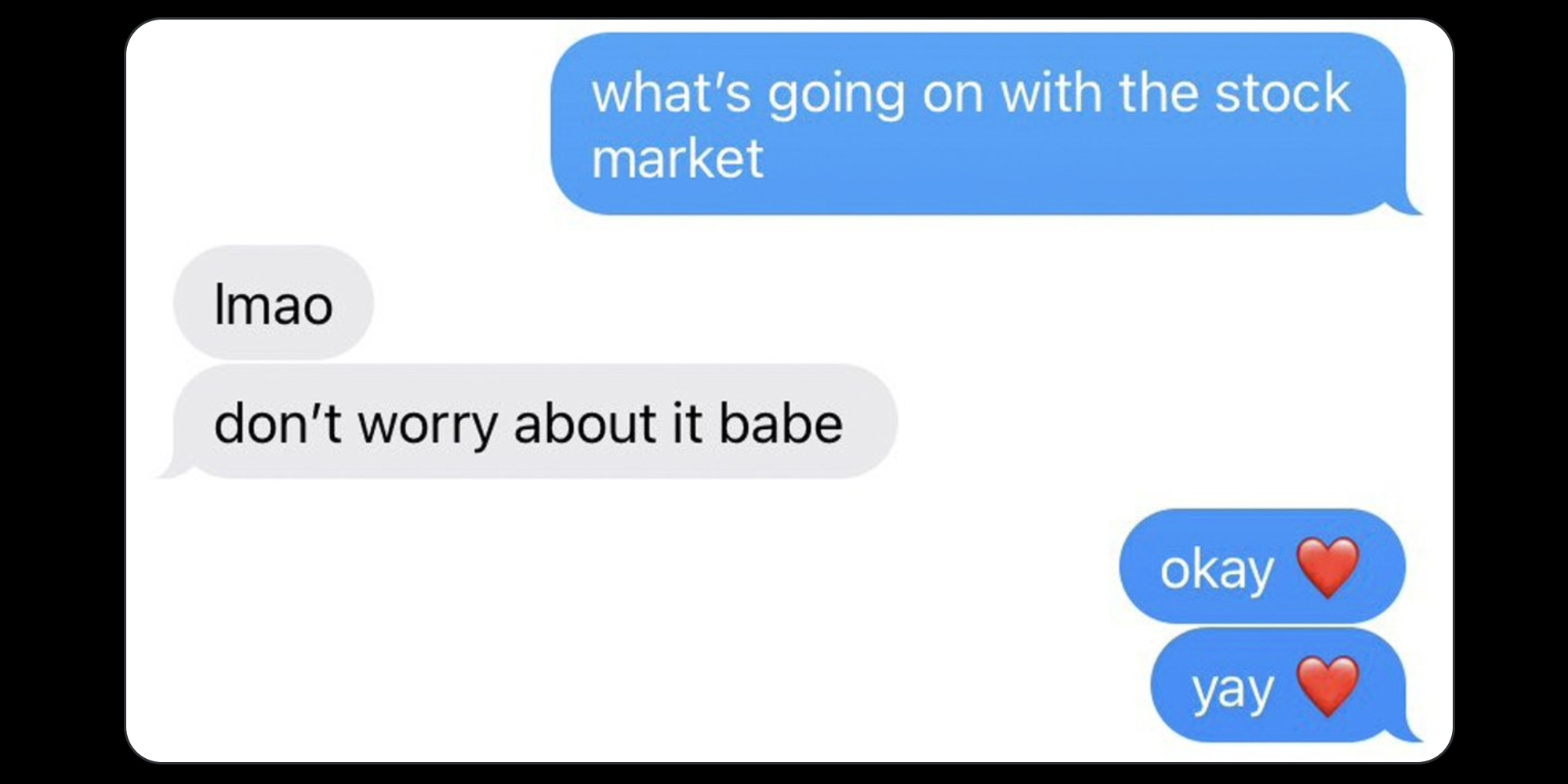
Equity indices also continued to climb to new all-time highs by the end of the week. Asked if he’s worried about the possibility of an AI bubble on the back of this price action, Amazon founder and aspiring Rocket Man Jeff Bezos hit us with the classic “lol, don’t worry about it babe.”
That said, a report late Friday of a foiled IRGC attempt to assassinate Ivanka Trump may (false flag or not) muddy the water here just a bit, and as of Saturday morning all the scuttlebutt seems to point in the direction of resumed hostilities over the long weekend.
The minutes from the Federal Reserve’s latest FOMC meeting suggested growing appetite for rate hikes if Hormuz-driven inflation remains elevated, confirming investor fears from last week’s hot CPI print.
That made it a particularly interesting week for new Fed Chair and staunch Low Rates Enjoyer Kevin Warsh to be officially sworn into his post. Warsh’s ceremony notably saw President Trump reiterate his desire for Warsh to remain independent – as long as he “lets the economy boom” and doesn’t worry about a pesky little near-term energy shock.
Warsh may get some help here from the energy complex once (if) the situation in the Persian Gulf is resolved, as Iraq is reportedly in talks with OPEC – following the UAE’s groundbreaking decision to exit the cartel after more than 60 years – to boost oil production to 5 million barrels per day (vs just 1.4 million today and ~3.5 million before the war).*
Meanwhile on the homefront, retail earnings this week generally painted a picture of a resilient consumer despite the spike in oil prices, with both Home Depot and Target calling out surprising end market strength YTD. That said, WalMart was more downbeat, highlighting the impact of core goods inflation on its core demos.
The US’s messy re-shoring effort got some more positive news this week, as Century Aluminum confirmed it will move forward with building the first new aluminum smelter in the US in nearly 50 years to more than double annual domestic output, in partnership with the UAE (whom attentive readers may recall just exited OPEC and received a USD swap line).
The financial statecraft angle that the Trump administration has used for moves like those swap lines may face a challenge soon, however, as two Senators introduced a bipartisan bill to restrict the Treasury Department’s use of the $200 billion+ Exchange Stabilization Fund, which has been a key pillar of Secretary Bessent’s international agenda.
Overseas, Russian President Vladimir Putin made his own visit to Beijing following the much-publicized Trump trip last week, though notably the two sides still have yet to agree on a critical oil and gas pipeline deal.
Down south, the US officially indicted former Cuban President Raul Castro following months of clear overtures toward the island nation, with President Trump suggesting he’ll be the one to finally intervene in Cuba after decades of US appetite to do so.
On the same theme, Secretary of State Marco Rubio rattled his saber at Bolivia in defense of Our Sacred Democracy, as the US continues to clearly indicate its desire to dramatically increase its influence in Latin America.
Elsewhere in the ongoing expansion of wartime state power, following the Department of War’s well-publicized spat with AI frontier lab Anthropic several months ago, the Trump administration reportedly prepared an executive order that would, uh, “encourage” AI labs to provide the DOW access to their latest models 90 days ahead of the public. However, the President said he would wait to sign the order for now, noting concerns it could reduce the US’s edge over China.
After years of anticipation, SpaceX’s S-1 filing for its upcoming IPO was publicly released this week. The offering may have negative near-term implications on the margin for investor liquidity as many public markets investors may need to source funds from elsewhere to participate in the nearly $2 trillion company, but a noteworthy element of the filing for our purposes is the 18,712 bitcoin held on the company’s balance sheet, apparently purchased around the $35,000 mark.
Mubadala, one of the UAE’s key sovereign wealth funds, increased its reported bitcoin holdings by 16% during the first quarter despite the orange coin’s early year drawdown and chaos in the Gulf throughout March.
Trump Media and Technology Group, meanwhile, moved over 2,000 bitcoin in a transaction that was widely interpreted as a sale, though the company told Barron’s it was only transferring rather than selling the bitcoin.
*These em dashes were proudly handcrafted by meatspace laborers in the United States of America. No GPUs were harmed in the production of these sentences.
Regulatory Update
White House digital assets advisor Patrick Witt suggested again this week that an update on the Strategic Bitcoin Reserve will be coming soon.
It’s unclear if this is what Witt was alluding to, but Congressman Nick Begich introduced the bipartisan American Reserve Modernization Act (ARMA) this week, an update of last year’s BITCOIN Act with 16 cosponsors that would direct the US Treasury to acquire a 1 million bitcoin reserve over five years via proceeds from a statutory gold revaluation.
President Trump signed an executive order directing the Fed to consider opening up master accounts to fintech and crypto firms, a long-elusive goal of many companies outside the major tier-1 banks.
Despite many false starts, the CLARITY Act has continued to see delays, failing to pass before the Memorial Day recess and leaving a tight timeline for passage before the summer.
Minnesota passed a law explicitly allowing banks and credit unions to engage in digital asset custody.
Noteworthy
Rabobank strategist Michael Every, who has consistently seen the ball on the global realignment of the past 18 months more clearly than most, published a new paper on the potential for increasingly bifurcated energy and commodity markets, challenging the “law of one price” arbitrage assumptions that have dominated post-Cold War international trade.
Your humor continues, you are the champ, at least one solid quote every writing, "(10% off your first trade with code AYATOLLAH)."
You have set the bar high for yourself, keep delivering!