

After months of leaked excerpts, roadshow whispers, and a cottage industry of Substack forensics on a document almost nobody had actually read, Anthropic finally published its S-1 this week. Relative to where sentiment has sat for the past couple of months (which, as we covered a couple weeks back, featured a timeline-wide meltdown over growth slowing to a pedestrian 45% quarter over quarter), the filing came in generally better than feared. As should be expected from what has become history’s largest global Rorschach Test, the skeptics got more than enough fodder to keep them going, including claims of excessively flattering accounting gimmicks, a mind-boggling level of compute commitments over the next decade and beyond, and a conspicuous lack of Q3 disclosure. That said, the company posted operating income in the black for Q2 (even including stock-based comp), positive free cash flow for the half, a cash balance rivaling many sovereign wealth funds, and customer metrics that would make any SaaS CFO blush. Whatever the nuances and forward path from here, we have a hard time believing that the most vociferous Anthropic bears could have conceived of margins and cash generation anywhere near this level at the start of the year.
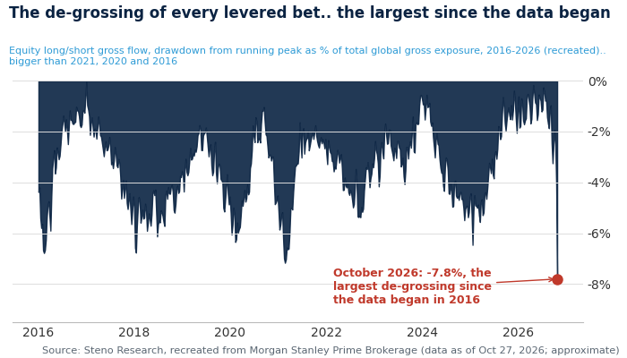
But at the end of the day, what investors love more than anything is the Mystery Box, the unquantified (better yet, unquantifiable) upside of the hypergrowth story with unconstrained TAM expansion and no signs of slowing down, and a story like that is basically required once we start measuring capex requirements in percentage points of global GDP. As a result, the increasingly frequent kinks in the Lab IPO narratives have, despite many undeniably positive data points for AGI bulls, continued to take the air out of the trade, with the market once again puking anything with a hint of AI exposure this week to close out an already ugly October that included one of the worst hedge fund de-grossing events on record. It’s probably no accident that this is roughly coinciding with the quarter when the hyperscaler cohort has gone firmly free cash flow negative for the first time in a decade, as the market now has to digest external financing demands to keep the wheel spinning (absent an inflection in hyperscaler operating cash flow). But that’s somewhat awkward for many of the themes we’ve been highlighting this year, as the aggressive spending funded by the cash gushers of some of the highest ROIC businesses in history has been a nontrivial driver of the resurgent PMIs and better-than-expected Q3 GDP growth print we saw this week. The calendar isn’t helping either, with the US facing down a hotly contested midterm election on Tuesday: wobbly markets are about the last thing any incumbent party wants heading into a vote, particularly one that could leave a good deal of the administration’s agenda for the next two years at the mercy of a hostile Congress.
Meanwhile, the fiscal ledger leaves a little less cushion for a growth scare than it did last cycle, with debt held by the public now officially past 100% of GDP and net Treasury purchases from the US’s closest allies down sharply this year. There’s more than a little nuance to that last piece, but it’s one more pressure point on the margin for the Coupon Cleanup Crew to manage, and it puts even more of the load on the growth and dollar reshoring agendas to pull their weight. Should those engines start sputtering, we have a pretty good guess which lever gets reached for next, and what that tends to mean for the scarcest assets on the board. As a bit of poetic timing worth considering on this front, this week’s massive Binance hack coincided almost to the day with the FTX implosion that bracketed the last midterm election season (as well as roughly the bottom of the last major market rout), and bitcoin, for all its volatility and long periods of maddening chop, is up ~5x off that period.
Selected Portfolio News
Strike lowered borrowing rates for bitcoin-backed loans worldwide:


As the world’s largest investor focused on the convergence of bitcoin, energy, and AI, Ten31 has deployed over $200 million across two funds into more than 30 of the most promising and innovative companies in the ecosystem. Visit ten31.xyz to learn more and get in touch about participating.
Media
AnchorWatch Co-Founder and CEO Rob Hamilton appeared on What Bitcoin Did to talk through the technical threats facing bitcoin and software more generally in the age of AI agents.
Market Updates
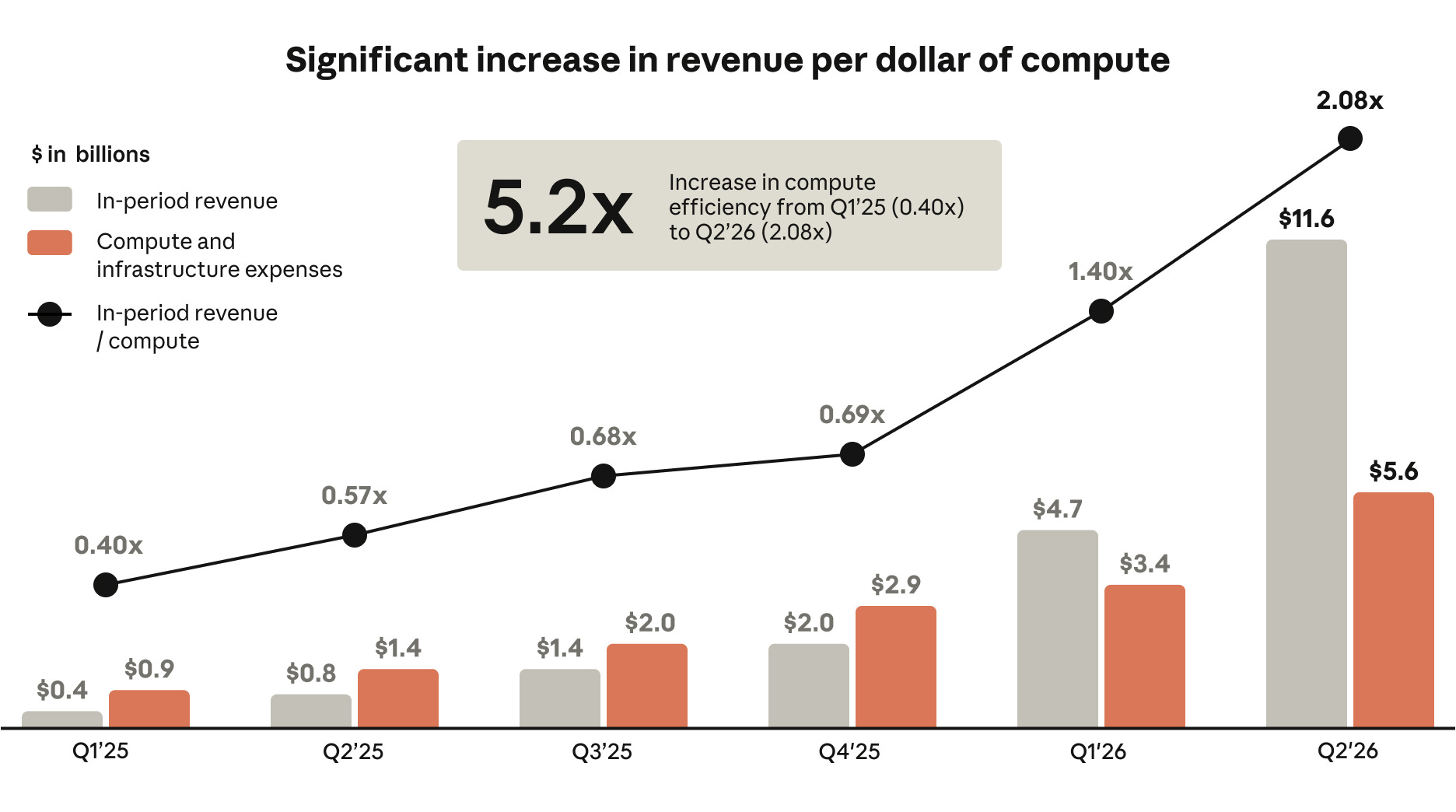
Anthropic finally filed its S-1 this week, and the numbers came in much better than feared on many fronts, including a stronger than expected cash position, positive free cash flow through the first half, and nearly $1 billion of operating income (on a GAAP basis, no less) in the second quarter.
That came on the back of extremely strong customer statistics, including roughly 900% net revenue retention and surprisingly solid user breadth, with more than 11,900 customers now spending at least $100,000 a year against about 950 a year earlier, including strong representation among the Fortune 500 (i.e. penetration beyond the circular VC-backed ecosystem).
But as always in the AI trade, there was plenty for bears to gleefully jump on as well, from arguments that the profitable quarter was temporarily inflated by discounted SpaceX compute and delayed payment terms, to the massive long-term compute commitments which Michael Burry tallied north of $500 billion, to third-quarter numbers that were notably left out of the filing in a move Steve Eisman called “very intentional”.
Anthropic also published an update on its drug discovery partnerships and noted that it has begun drug discovery efforts of its own, the latest sign that the lab is moving toward verticalizing and keeping at least some of its alpha in-house.
The lab’s moat may also be a bit wider than feared, as Artificial Analysis moved to closed benchmarks and found open-weight models falling further behind than it had previously measured, with the top open contender now 12 points off the frontier versus 3 points in the prior version.
Away from the labs, Goldman said it’s seeing clearer signs that AI’s impact is spreading beyond the tech sector, with corporate adoption now showing a statistically significant negative correlation with employment growth, while new research found that productivity trends in the three heaviest-adopting sectors have more than doubled since 2022 even as the rest of the economy has barely budged.
Microsoft seems to have gotten the memo, offering buyouts to around 60,000 employees, more than a quarter of its global workforce, to help contain costs and fund its AI spending.
Meta, meanwhile, followed up its first negative free cash flow quarter in years by heading straight to the equity market, announcing plans for up to $95 billion of stock sales to fund the buildout, kicking off with a roughly $35 billion offering this week (a marked reversal from the buyback machine investors had come to know and love).
Broadcom tapped a different well, with Bank of America, Blackstone, Citi, and Morgan Stanley lining up a landmark $63 billion compute financing, following up on Nvidia’s $500 billion financing platform with Goldman and a who’s who of private capital back in August, the latest sign of a growing integration between Wall Street and Silicon Valley on the buildout as capital requirements reach unprecedented scale.
Lest anyone worry the spigot is running dry, BlackRock’s Rick Rieder said he spent the weekend working on data center debt deals and called this one of the “most exciting investment periods I’ve ever seen,” suggesting the market is still very active despite fears around neocloud credit.
That said, price action this week may free up more of Mr. Rieder’s time for trick-or-treating this weekend, as the market rounded out a brutal October with a violent selloff courtesy of a rough slate of earnings from the bellwethers of the AI trade. Alphabet and Amazon both sold off hard on their prints, and Intel dumped as much as 30% for its worst day in over 50 years, erasing a big chunk of this year’s parabolic gains and helping drive the Nasdaq down 3% on Friday for its worst day since June.
Amid the carnage, OpenAI is reportedly planning to reduce the funding target for its next round by $10 billion, with the valuation now expected to come in at $1.25 trillion off of $1.4 trillion a few weeks ago.
Software and web platforms fared no better, as Google notably said Search monetization slowed on weaker returns from AI Mode, Reddit’s CEO said bluntly that “AI Mode does not drive traffic” for web destinations, and ServiceNow got annihilated on weak earnings for its worst day ever, all of which did little to calm jitters about the durability of software businesses.
China is having an even worse time of it, with the mainland’s AI-heavy STAR50 index now down 40% from its July high, while the domestic auto industry is crashing at home even as exports hold up, hinting at the fundamental dilemma of the country’s involution model.
Yet while markets were dumping tech, the broader industrial picture looked anything but shaky (on admittedly backward-looking indicators), with the S&P Global manufacturing PMI rising to 56, a new high for the year and its highest level since May 2022. Q3 GDP followed suit, beating expectations with growth at 3.4%.
On the fiscal side, debt held by the public officially hit 100% of GDP for the first time since 1946, a milestone that underlines just how much is riding on keeping growth humming.
Foreign buyers provided a bit less support for that burden as well, as Bloomberg reported that Treasury buying from the most US-aligned countries fell 60% Y/Y through the first eight months of the year, though weaker home currencies and higher yields at home are doing much of the work there, and net buying from this cohort is still solidly positive on the year.
Amid the choppy capital markets and higher growth prints, the Fed held rates steady in a 10-2 decision, while Treasury Secretary Scott Bessent interestingly said it would “not necessarily” be a mistake for the Fed to tighten from here.
Not everyone in the Fed system sees much need, as a San Francisco Fed paper pointed to continued disinflationary momentum in PCE (the Fed’s preferred gauge of inflation), with its inflation shock momentum index in negative territory for a fifth straight month.
The 10-year fell back below 5% again this week, though the MOVE Index is still hovering around 100, well above where it sat over the summer.
Down south, Lula unexpectedly won Brazil’s election, sending Brazilian stocks down 25% on the week, though there may be some, uh, irregularities around a last-minute extension of voting hours. In any case, the result marks a significant break from this year’s trend of Latin American countries moving in a Trump-friendly direction, which is particularly noteworthy here given Brazil’s place among the most important players in the hemisphere from a resource perspective.
Shortly thereafter, President Trump repeated that Venezuela could become the 51st state, which would at least make for some interesting neighborly dynamics with the new Lula administration.
Elsewhere on the geopolitical game board, the US reportedly told Gulf allies to be prepared for a “short, intense military campaign” against Iran after the midterms.
While the world waits to see the next move in the US-Iran saga, Russia and Ukraine also kept trading blows amid a partial, tenuous (and maybe nonexistent?) energy ceasefire, with Ukraine hitting another refinery in a record overnight drone barrage just a day after reports that Kyiv had agreed to pause refinery strikes under US pressure.
In the digital asset world, prominent offshore exchange Binance suffered a massive hack, the largest in history at roughly $6 billion. The exchange said it will cover all losses and suspended deposits and withdrawals in the meantime.
Notably, the attack appears to have exploited Ethereum’s complexity via its EIP-7702 delegation mechanism, another lesson in favor of bitcoin’s intentionally simple and limited design.
Bitcoin, for its part, fell below $80,000 on the news and is holding around $77,000 as of this writing. For what it’s worth, Galaxy’s Alex Thorn laid out a variety of reasons to think the bottom is likely in, though we’re hovering just a bit above the 50-week moving average Galaxy cites as a key level.
And don’t look now, but bitcoin hashrate is back near all-time highs despite a massive AI pivot from the large public miners and middling price action throughout the year.
Regulatory Update
The CFTC sued Utah to block the state from enforcing its gambling laws against federally registered prediction markets, with Chairman Mike Selig arguing Congress made the agency the regulator with “sole responsibility” for these markets.
Utah responded a day later by criminally charging Kalshi’s co-founders with promoting illegal gambling, which really rained on the parade of the company announcing its latest round at a $40 billion valuation.
Noteworthy
Google previewed a bitcoin-compatible custody system for banks that can split key shares across a bank’s own hardware, Google Cloud, and a rival cloud, with a broad release targeted for early 2027.
ICE, parent of the NYSE, announced a new collaboration with Trade[XYZ] to bring Hyperliquid-based perpetual futures onshore, endorsed by none other than Stan Druckenmiller in his first tweet ever (as always, we will never fade Druck, but we do think there are some interesting questions worth considering about this collaboration, many of which were also raised in our piece on stablecoins earlier this year).
Coinbase’s CSO pointed 16 AI agents across five frontier models at Bitcoin Core (bitcoin’s main reference implementation) for a week and turned up only two minor issues, which is no doubt nice to hear after several months of basically all legacy software being borked by agent swarms.